exhibit object 2023
microplastic scanner
My role
Research // Concept // UX // UI
Supervison
Hans Krämer // Marc Guntow // Markus Weinberger
Team
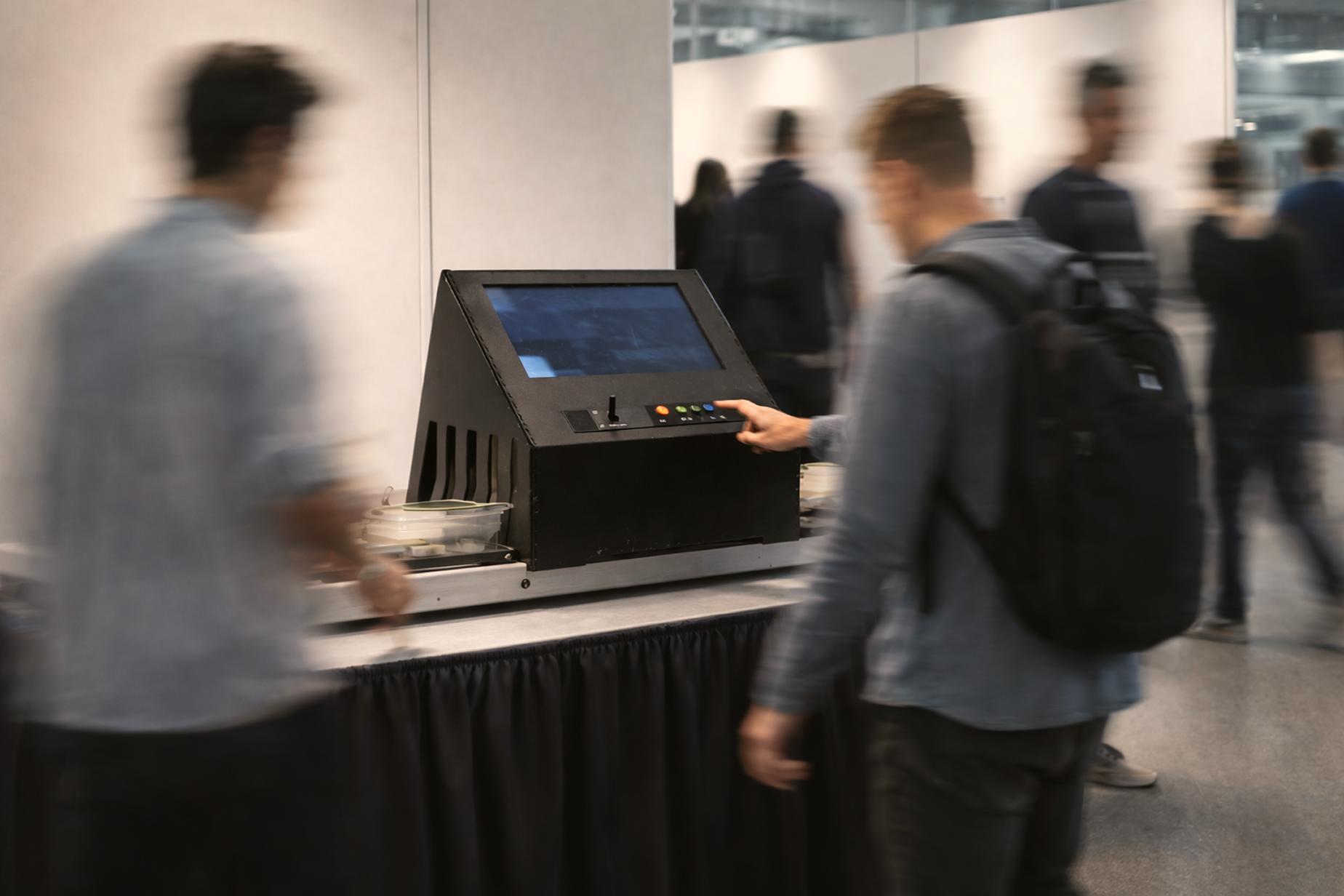
Inspired by airport security scanners, this interactive installation reveals microplastics hidden in everyday objects.
Why?
Microplastics are present in many everyday objects, yet remain invisible and hard to grasp, making their impact on the human body easy to overlook. This project explores how interaction can make them visible and more understandable.
Do you know how much microplastic is in your everyday objects? This exhibit educates visitors about the microplastics in common items and their effects on the human body.

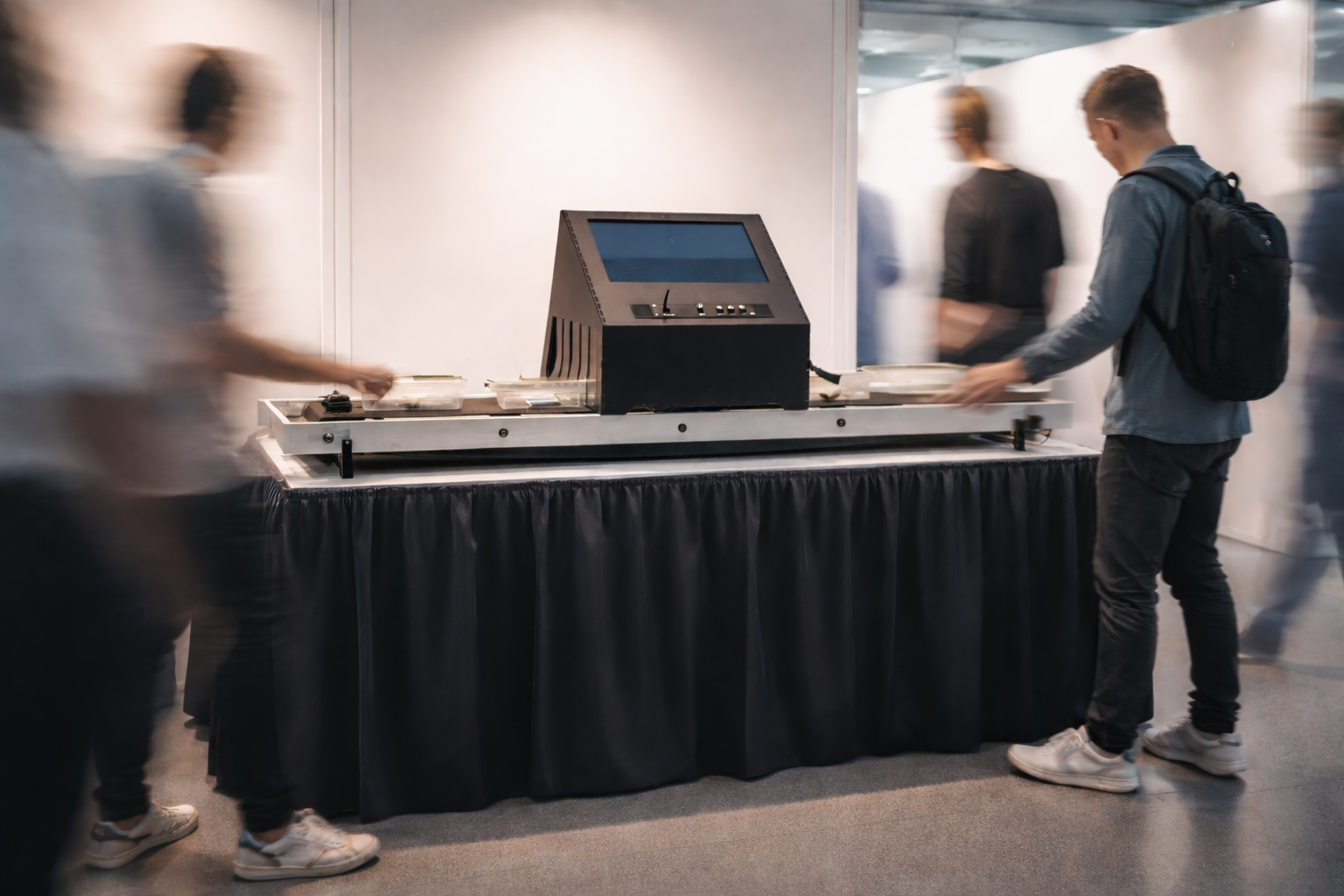
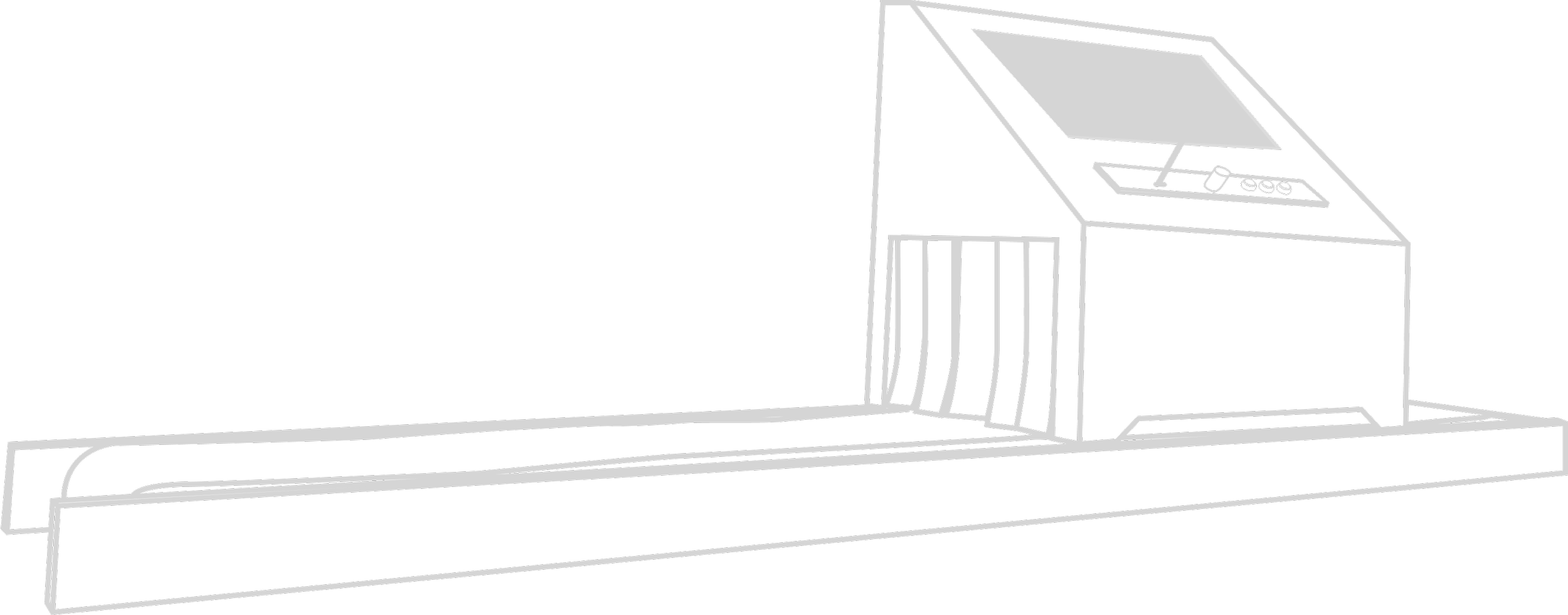
A selection of prepared everyday objects can be placed on a tray, similar to an airport security check, and sent through the scanner on a conveyor belt. Instead of detecting prohibited items, the system reveals microplastic particles hidden inside, making visible what is usually overlooked in the objects we use every day.
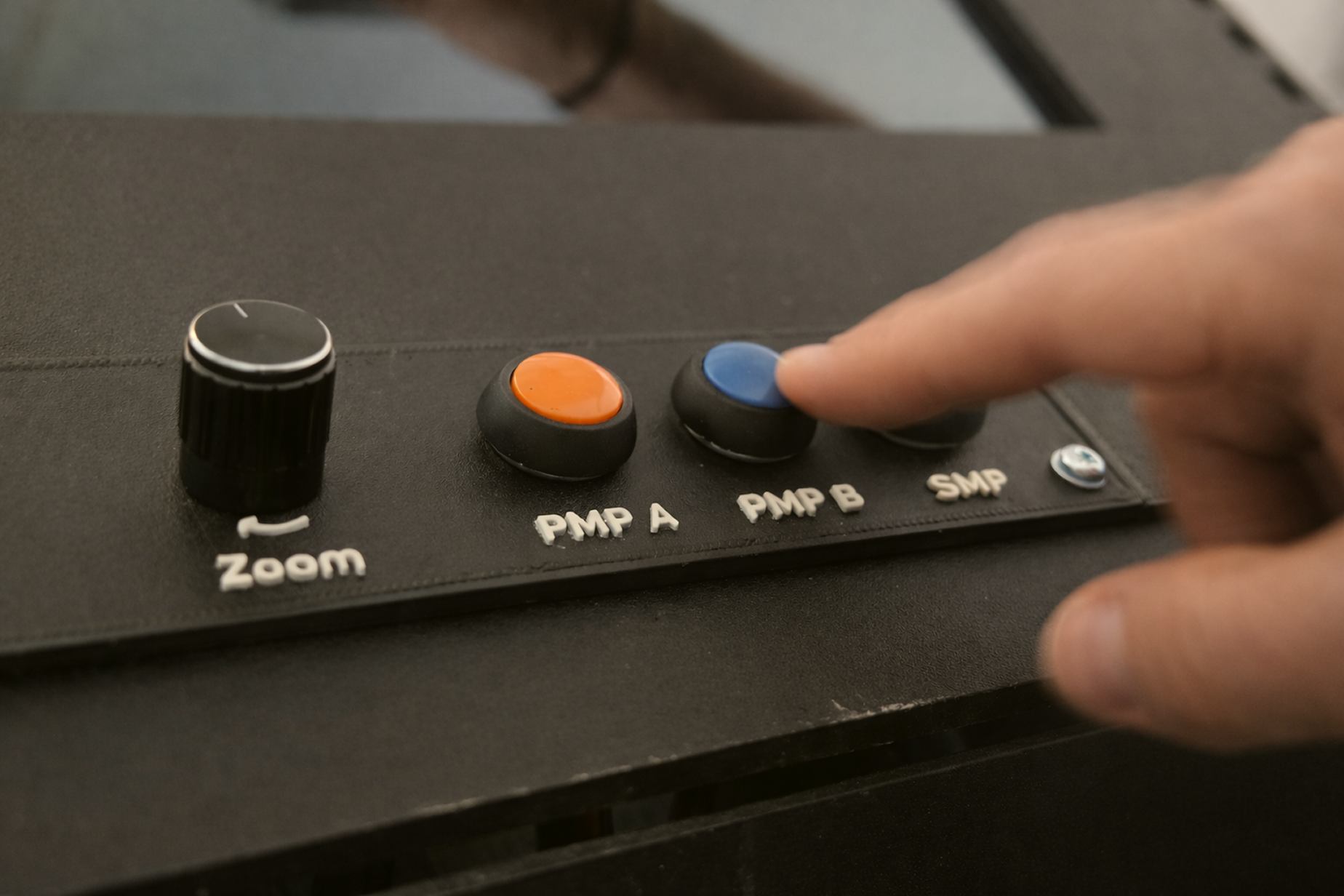
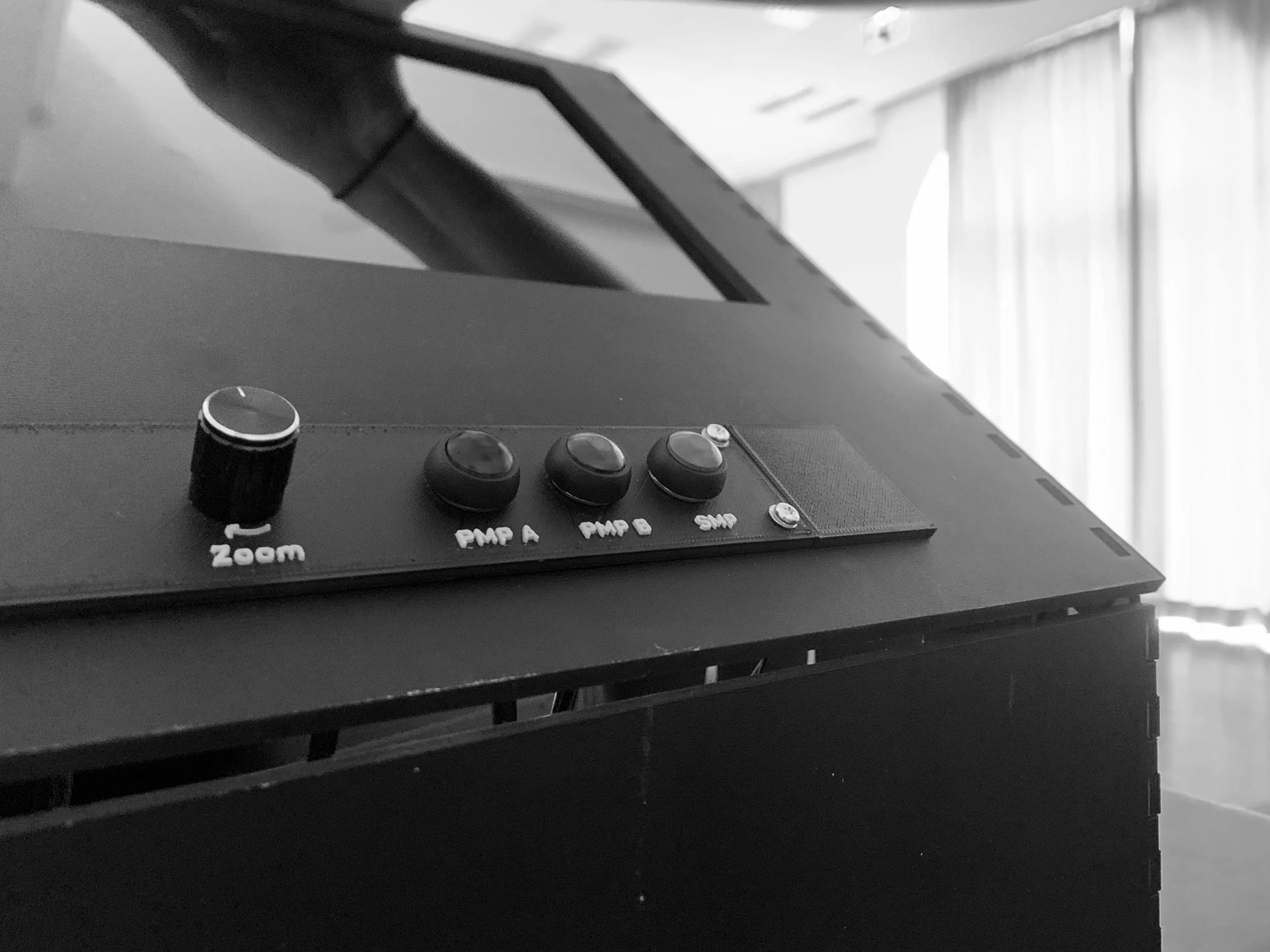
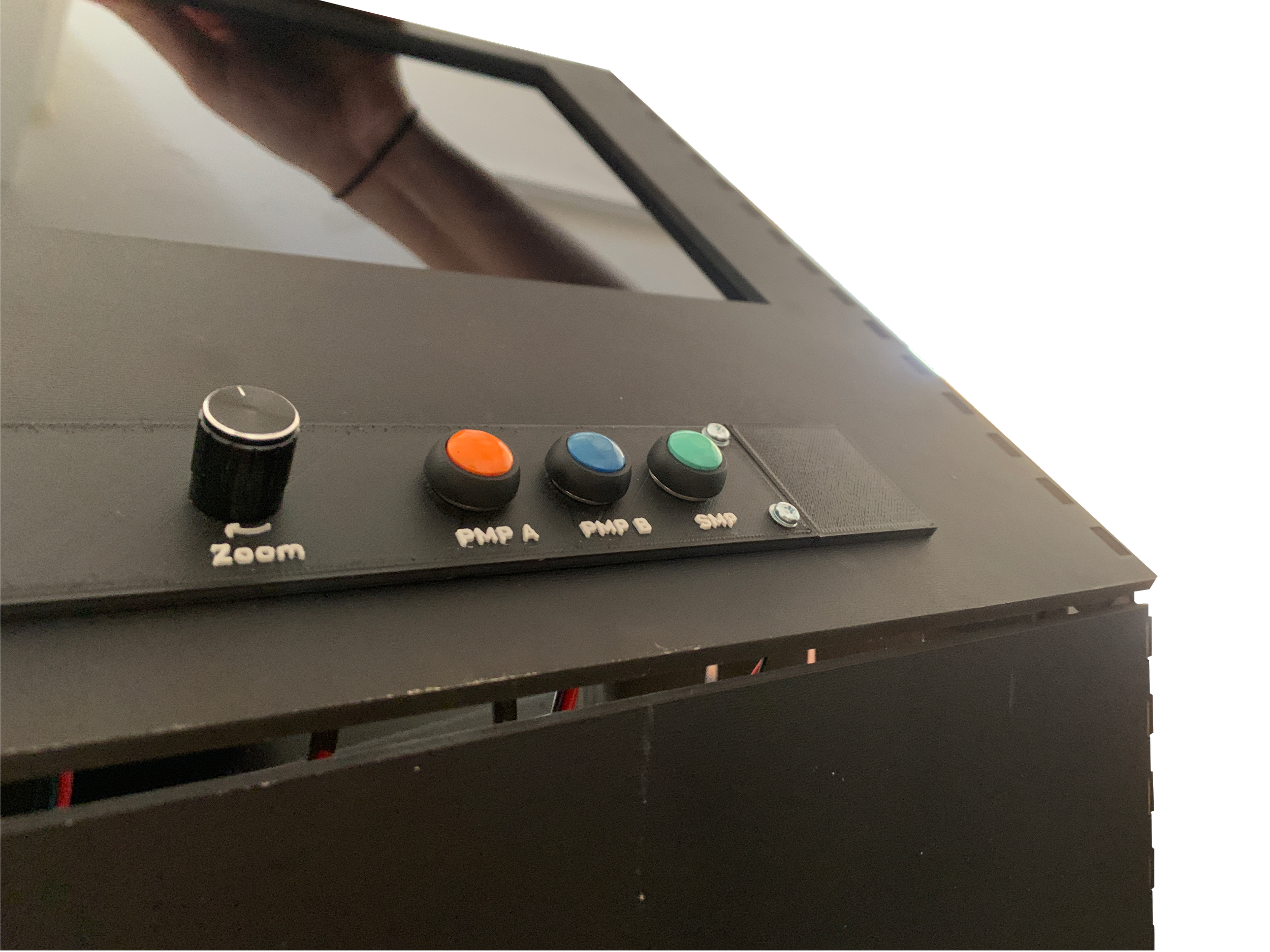
Three colored buttons allow users to highlight different types of microplastics, while a zoom function enables a closer look at the scanned object.

As users zoom in, additional information appears around the object, adapting to the level of detail.
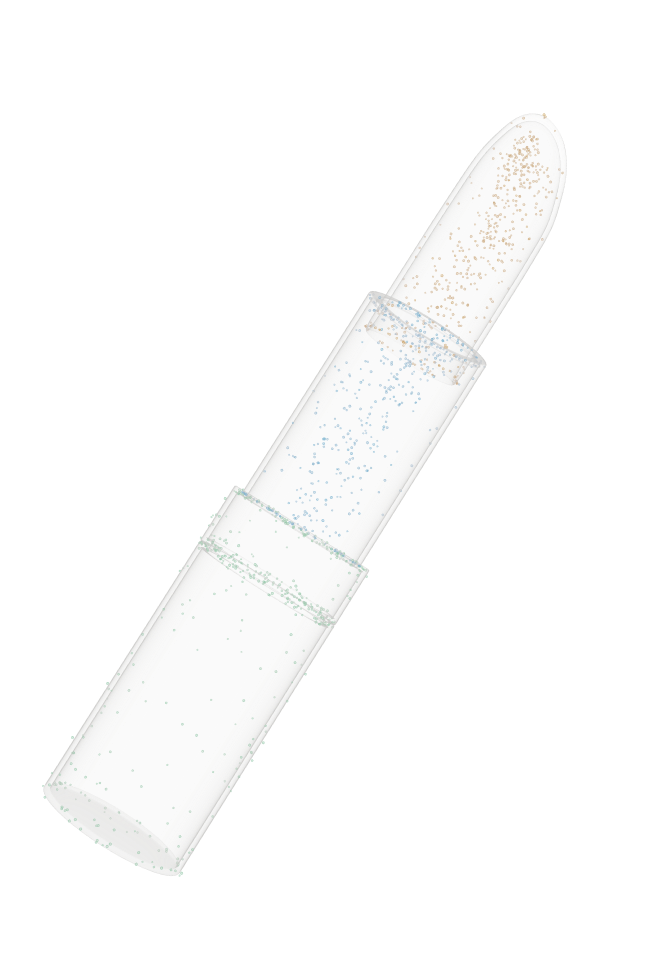
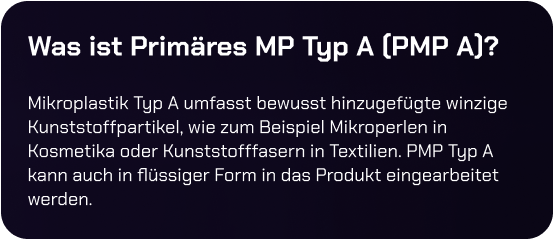
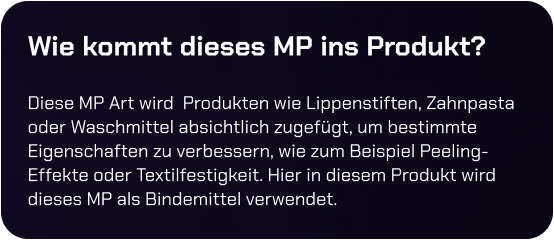
With each zoom level, the information becomes more detailed, unfolding across three levels.
Design
The interface presents information about microplastics such as their types, origins, and effects on the human body in small, engaging pieces. This approach allows users to explore the content step by step without feeling overwhelmed.
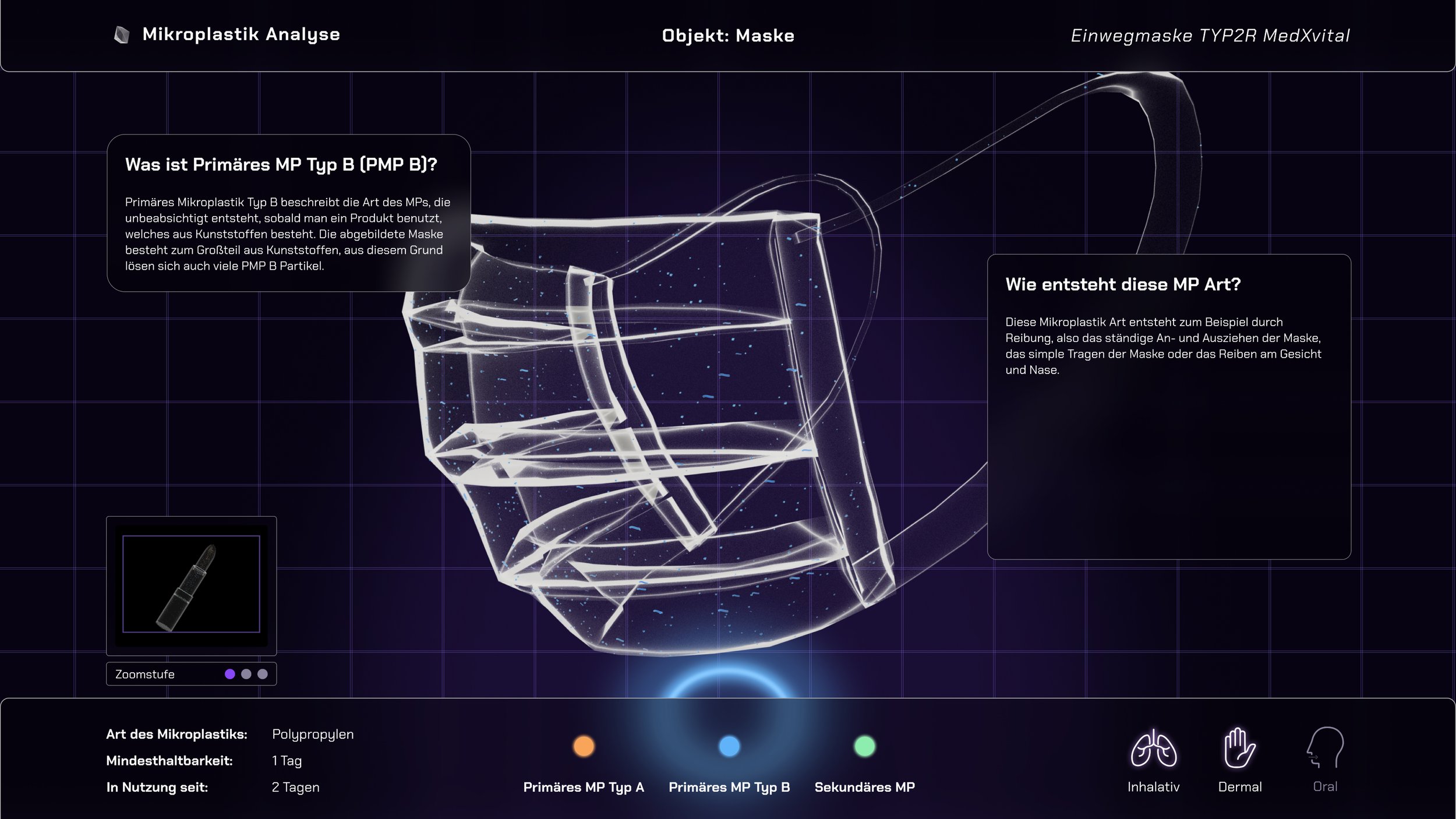
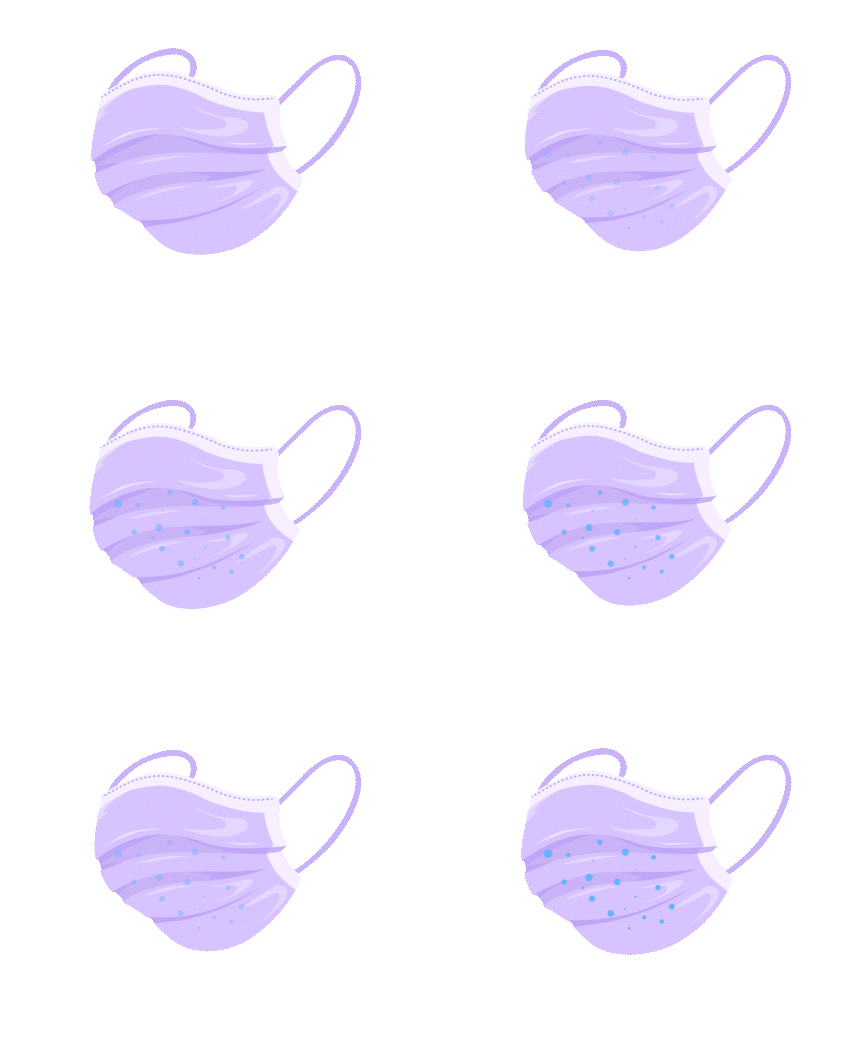
* Snapshot from the UI: A mask was placed inside scanner *
The UI should have a technical character to maintain the metaphor, yet look more modern and exciting than actual airport scanners. Visual elements such as typography, color, and layout were carefully chosen to support this balance.



Animations help to support the content visually and make abstract information easier to understand.


*size of a particle*
*microplastics in chewing gum*

*formation through usage*
A functional prototype was developed within a multidisciplinary team, combining IoT, physical computing, and interface design. The scanner was built from laser-cut wood, enabling the installation to be exhibited and tested with users.
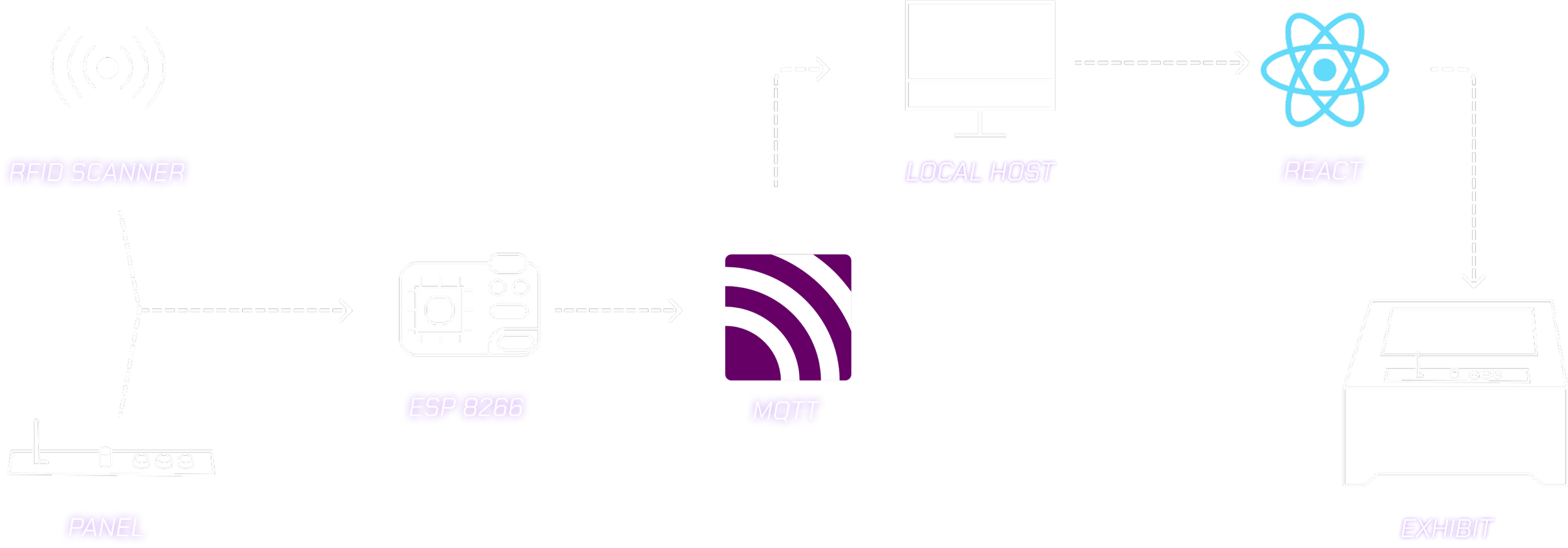
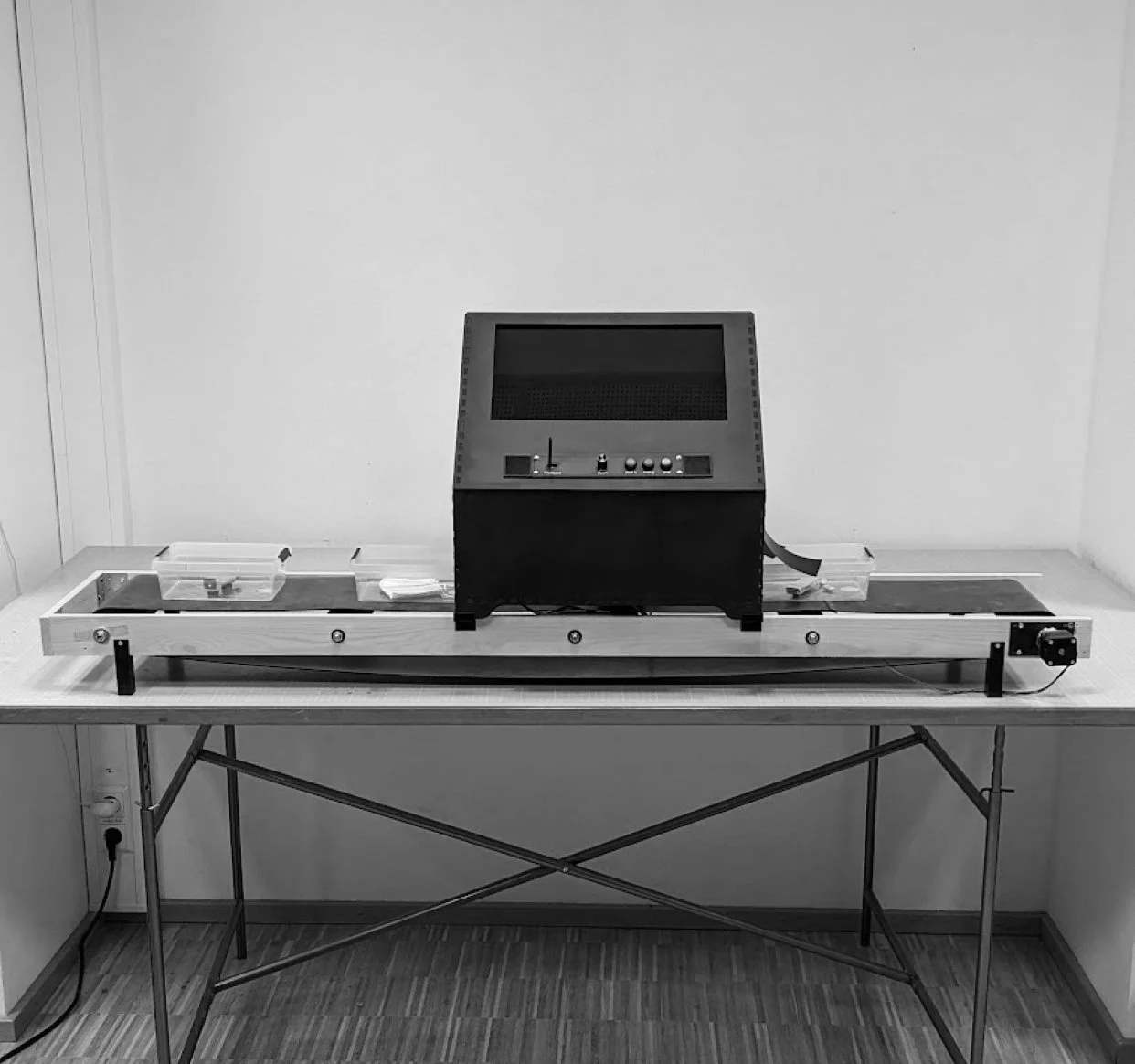
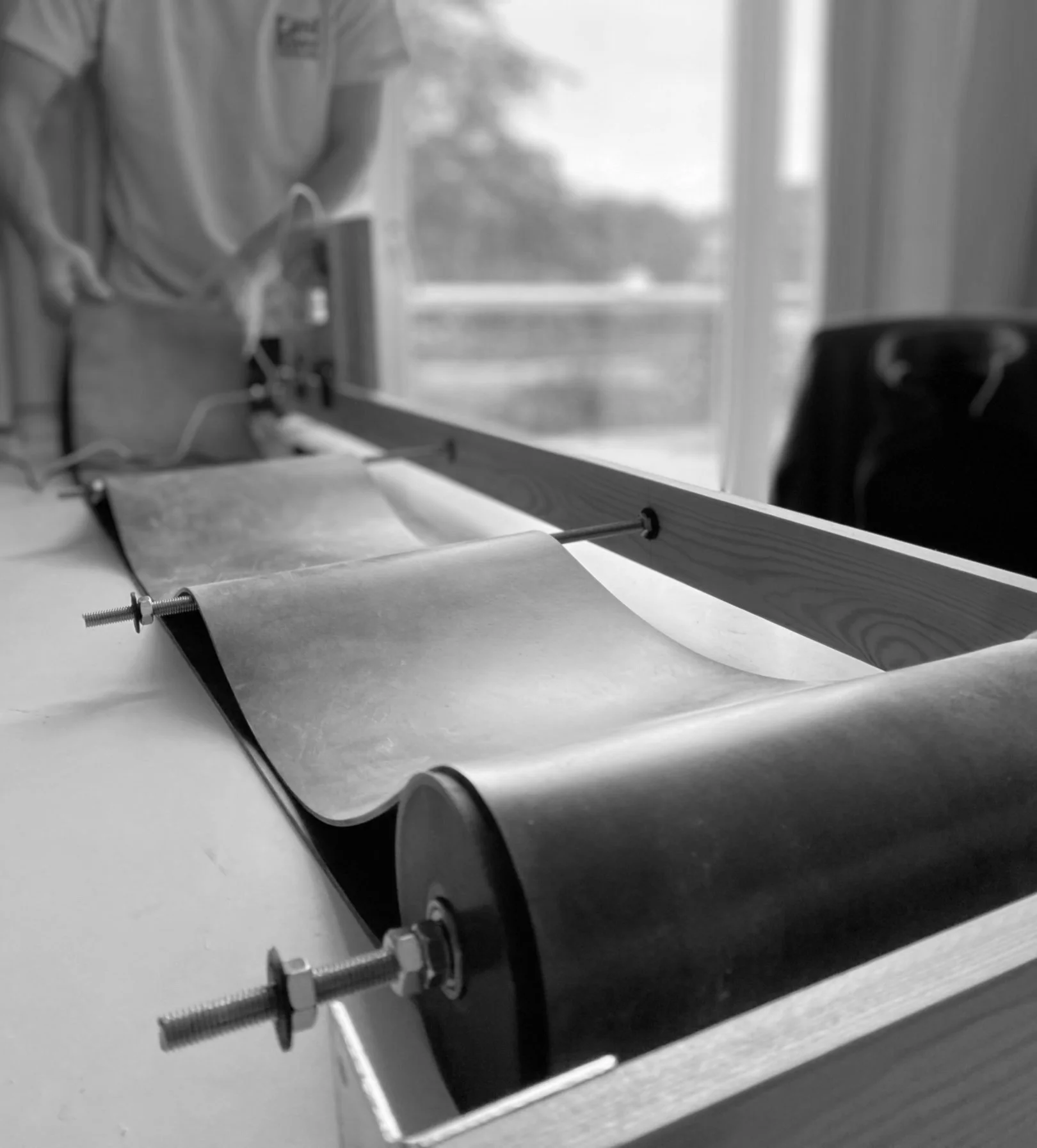
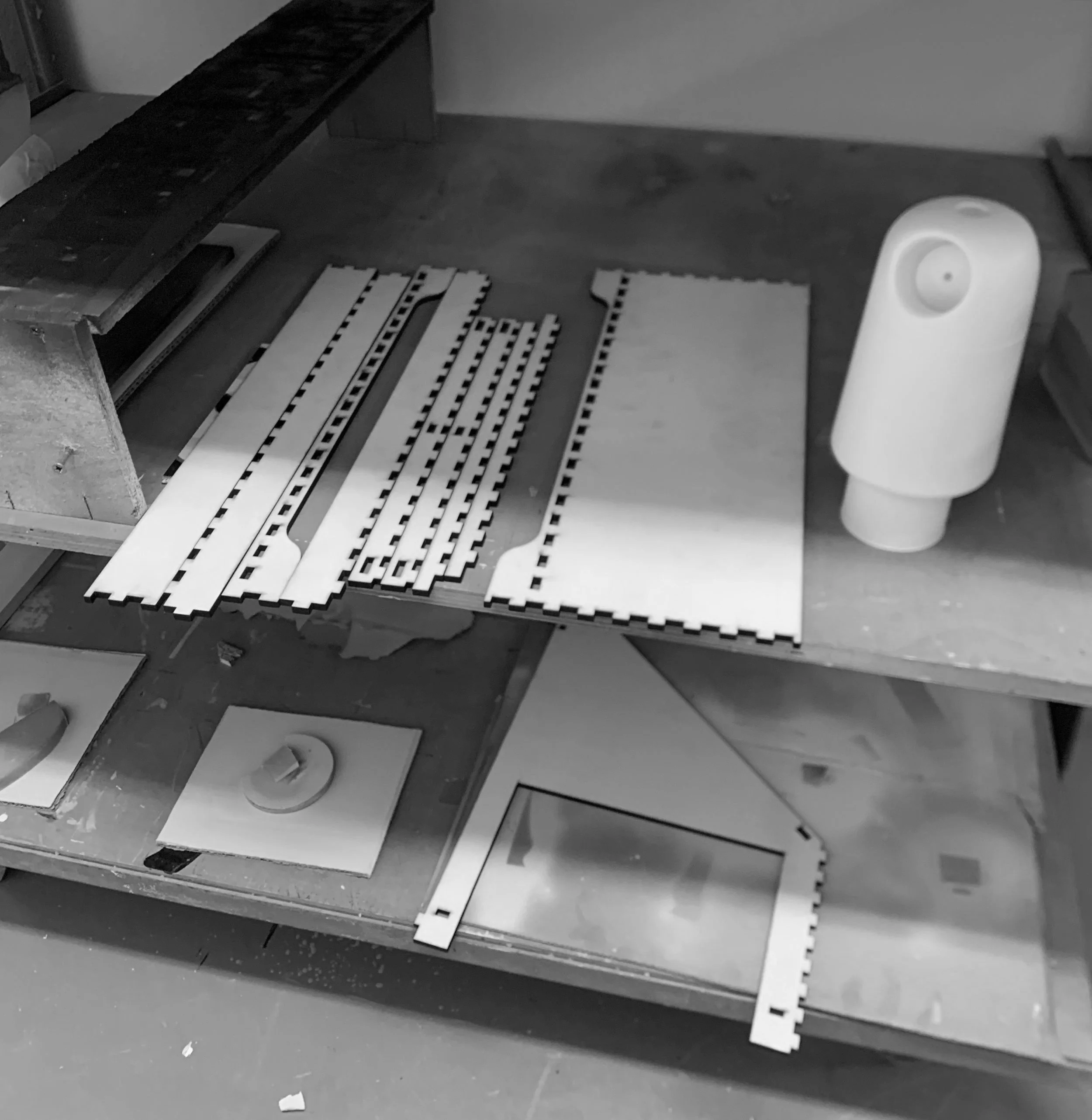
* technical prototype and wooden scanner were build by Leonard Thillmann, Karl Endepols and Philipp Däschle *
The installation was refined through iterative testing, focusing on aspects such as screen height, interaction flow, and the usability of physical controls. It was later exhibited as part of a semester show, where visitors could interact with the system and explore microplastics in everyday objects.